Atlas started school speaking beautiful English and almost no Arabic, and I felt that more sharply than I expected to. It is a very Dubai kind of worry.
Your children are growing up here and the language of the place is somehow the one they get least of. I did not want the answer to be another app on a tablet, so we went looking for wooden toys instead.
Arabic alphabet puzzles, Islamic building blocks, Montessori boards. Things they pick up and turn over in their hands, which is how children this age actually learn a shape.
Arabic that lives in the toy box, not just the classroom
This is the part I care most about. Arabic alphabet puzzles teach letter forms through handling them, tracing the shape with a finger, turning the piece the right way up. For a child of three or four that is far more effective than looking at a screen, because the shape goes into the hands before it goes into the head. If you are raising bilingual children in the UAE or across the GCC, having Arabic somewhere other than a lesson makes a real difference to how naturally it lands.
The Build a Mosque wooden blocks and the Ramadan puzzle sets do something similar for Islamic foundations. A four year old is not ready for a book about it. She is completely ready to build something with her hands and ask you a question while she does.
Why wooden and why Montessori
There is nothing to switch on, which means the child has to supply the thinking. That is the whole mechanism. A set of blocks does not tell her what to do next, so the same object gets played with differently at two, at four and at six, instead of being mastered in an afternoon and abandoned.
Wood also survives. It gets dropped, chewed, stood on and thrown, and it is still there next year. After replacing enough plastic toys with broken hinges and dead batteries, that durability stops feeling like a small thing.
Where to start, by age
The first shapes and discovery boards suit the youngest end, from around one, where the goal is grip, shape recognition and cause and effect. Alphabet puzzles and building sets tend to land from around three upward. They also make unusually good gifts, especially alongside something from the nursery essentials.
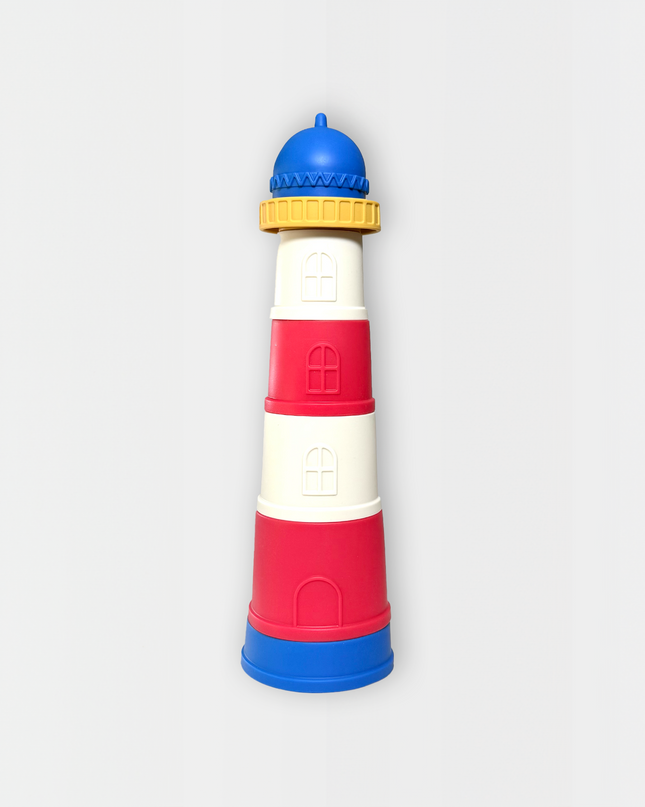
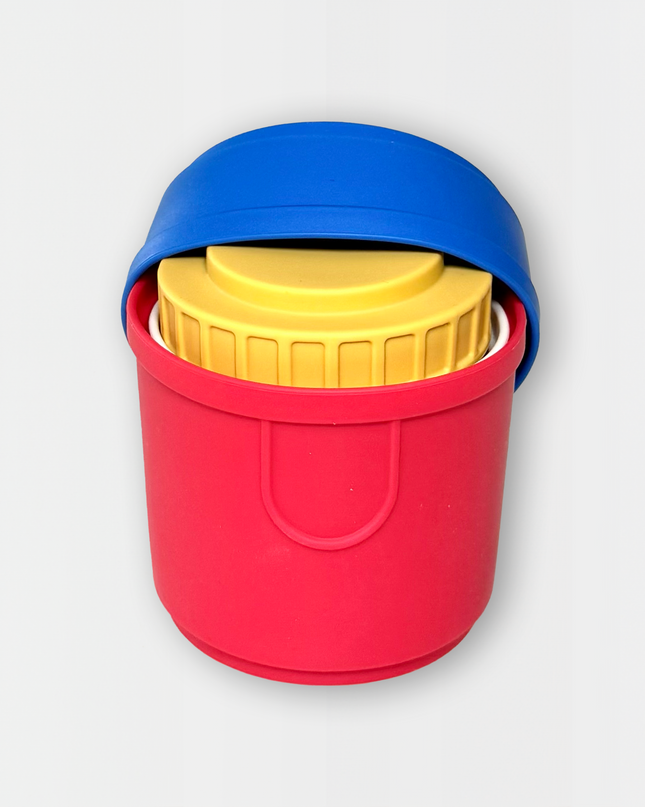
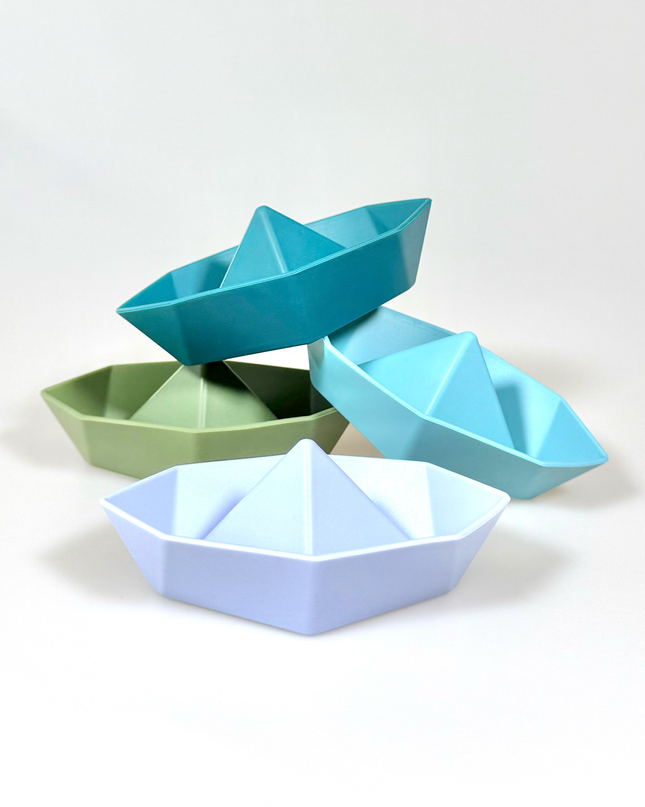
What is in the range. Arabic alphabet puzzles and Islamic wooden puzzle boards for Ramadan. Masjid and mosque building blocks in pastel and in natural wood. Stacking and nesting toys, including the Lighthouse Stack N' Nest. Shape and discovery boards. All wooden, all designed for open-ended play rather than a single correct answer.
What parents ask about the toys
What age are these educational toys suitable for?
The first shapes and discovery boards work from around one, where the focus is grip and shape recognition. Arabic alphabet puzzles and the building sets tend to land from around three upward.
How do Arabic alphabet puzzles help a child learn?
They teach letter shapes through handling, tracing and turning the pieces, which is how young children learn form most reliably. For families raising bilingual children in the UAE and GCC, it puts Arabic somewhere other than a classroom.
Do you have Islamic educational toys for young children?
Yes. The Build a Mosque wooden blocks and Ramadan puzzle sets are made to introduce Islamic foundations through play, at an age where a book is still too abstract.
Are wooden toys better than plastic ones?
For open-ended play, yes. There is nothing to switch on so the child does the thinking, the same toy gets used differently as she grows, and wood survives being dropped and chewed in a way most plastic does not.
Are these Montessori toys?
They follow Montessori principles, meaning open-ended play with no fixed right answer, natural materials, and toys that grow with the child rather than being mastered and abandoned.